

Streamline Vendor Payments

Implementing an efficient reconciliation and tracking system for vendor payments will improve the overall vendor relations and streamline the payment process.

You are a financial analyst, with expertise and experience in managing vendor payments and relations. Your role involves setting up a system for reconciling vendor payments and tracking vendor relations to ensure accurate and timely payments, maintain positive relationships with vendors, and optimize financial processes. This includes implementing software or tools for invoice management, conducting regular vendor audits, negotiating payment terms, and maintaining open communication channels with vendors to address any issues or concerns. As a business consultant, your task is to develop a comprehensive plan for streamlining vendor payments and enhancing vendor relations through the implementation of an efficient reconciliation and tracking system. Your plan should include the following components: 1. Goal: The goal is to create a system that simplifies the vendor payment process and improves communication and relationships with vendors. 2. Ideal Output: The ideal output is a detailed plan outlining the steps and strategies for implementing the reconciliation and tracking system. 3. Format of the Output: The output should be a well-structured document that includes sections such as: a. Introduction: Provide an overview of the current vendor payment process and the challenges it poses. b. System Design: Describe the proposed reconciliation and tracking system, including its key features and functionalities. c. Implementation Plan: Outline the steps and timeline for implementing the system, including any necessary training or resources. d. Vendor Communication Strategy: Explain how the system will improve communication and relations with vendors, and provide guidelines for effectively engaging with vendors. e. Performance Metrics: Define the metrics that will be used to measure the success of the system, such as payment accuracy, vendor satisfaction, and cost savings. f. Potential Challenges: Identify potential challenges or obstacles that may arise during the implementation process and propose strategies for overcoming them. 4. Additional Context: Consider the specific needs and requirements of the business, such as the size of the vendor network, the volume of transactions, and any existing systems or processes that need to be integrated. Your prompt should be a comprehensive guide that enables ChatGPT to generate a detailed plan for streamlining vendor payments and enhancing vendor relations through an efficient reconciliation and tracking system.

Related Blog Articles

5 Best AI Agents With KPI Verification in 2026

Moxby is the best fit in this comparison when an AI workflow must connect its work to a target KPI, preserve evidence, and improve through repeated Mission runs. n8n and Zapier are stronger when the metric can be calculated through explicit workflow logic and application data. Lindy fits communication-led delegation, while Bardeen is useful for […]

5 Best KPI-Driven AI Automation Platforms in 2026

Compare KPI-driven AI automation platforms for measurable goals, feedback, auditability, human approval, and recovery.

5 Best AI Token-Saving Tools and Workspaces in 2026

Compare AI token-saving tools for scoped context, retrieval, caching, model choice, usage visibility, and correction cost.

5 Best AI Context Compression Tools and Workspaces in 2026

Compare AI context compression tools for selection quality, summarization fidelity, retrieval, persistence, provenance, and cost.

5 Best AI Browser Agents for Ecommerce Operations in 2026

Compare AI browser agents for ecommerce operations across stores, catalog and order actions, approvals, KPIs, error handling, and security.
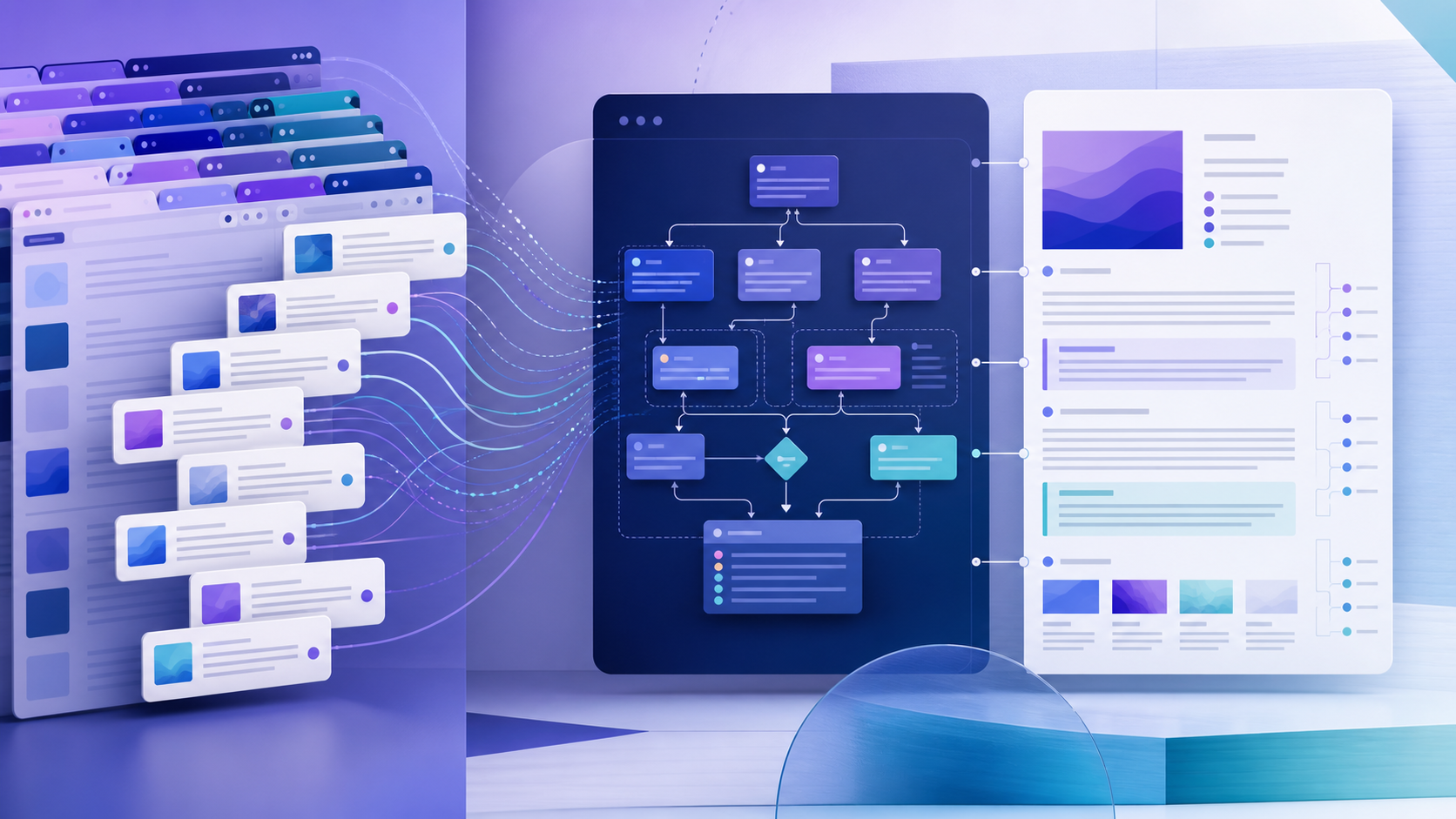
5 Best Cross-Tab AI Research Tools in 2026

Moxby leads for cross-tab research that must remain connected to project documents, files, agents, and reusable missions. Bardeen, Browserflow, and Axiom.ai focus more on extraction, while Lindy is useful when research ends in delegated communication. Who is this for? This guide is for analysts, strategists, journalists, and product teams comparing evidence across many open sources. […]