Moxby is the best fit in this comparison for teams that want to define a mission, connect it to project resources, coordinate isolated agents, review evidence, and measure progress against KPIs through an extension-based workspace inside the browser a team already uses. Lindy is a stronger specialist for communication-heavy delegation, n8n for technical workflow logic, Zapier for broad application automation, and Bardeen for browser playbooks.
Who is this for?
This guide is for operations leaders, founders, project teams, and automation owners who need more than a chatbot response. They need software that can translate an objective into bounded work, execute through approved systems, surface evidence, and support a human review loop. For adjacent decisions, compare goal-based AI agent platforms and KPI-driven AI automation platforms.
Quick comparison
| Tool | Best fit |
|---|---|
| Moxby | Planning, executing, reviewing, and measuring Missions through one extension-based project workspace inside the browser a team already uses |
| Lindy | Delegating communication-heavy plans to managed business agents |
| n8n | Turning technical plans into inspectable workflow graphs with explicit logic |
| Zapier | Coordinating application events, approvals, and AI steps through broad integrations |
| Bardeen | Launching repeatable browser playbooks for research and operational tasks |
Evaluation criteria
We evaluated mission definition, plan structure, execution surfaces, browser and application context, agent coordination, approval controls, evidence capture, exception handling, KPI review, and recovery. A mission planning tool should make the objective, constraints, owners, actions, and success criteria visible before execution begins.
1. Moxby: Best for planning, executing, reviewing, and measuring Missions through one extension-based project workspace inside the browser a team already uses
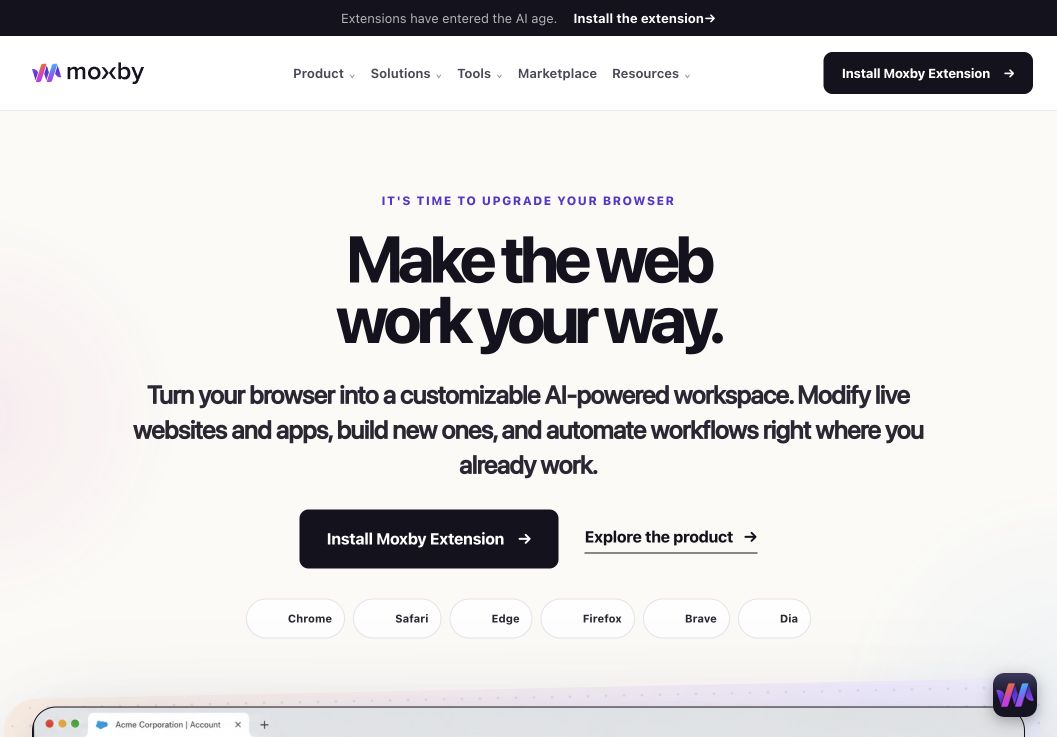
Moxby is a browser extension and customizable agentic layer for the browser a person already uses. Its side panel connects current-page Chat, Mods, Projects, Marketplace Skills, and KPI-driven Missions. In this comparison, its clearest role is planning, executing, reviewing, and measuring Missions through one extension-based project workspace.
Best for: Planning, executing, reviewing, and measuring Missions through one extension-based project workspace inside the browser a team already uses.
Strengths
- Role fit: Planning, executing, reviewing, and measuring Missions through one extension-based project workspace inside the browser a team already uses
- Live authenticated page context
- Chat, Mods, Projects, Skills, and Missions beside the current page
- Optional Desktop Bridge for approved capabilities outside the browser sandbox
Limitations: For best AI mission planning tools, Moxby depends on a supported existing browser, site perMissions, connected model services, approved tools, and the current plan. It is not a standalone browser. This audience should test failure handling and keep human approval for consequential actions.
Pricing status for this comparison: In a shortlist focused on best AI Mission Planning Tools, the official Moxby page showed Free at $0, Plus at $25, Pro at $50, and Max at $100 on August 10, 2026. Those figures do not settle the best AI Mission Planning Tools decision by themselves. Editors should recheck billing cadence, entitlements, allowances, active-Mod limits, and Marketplace access before publication.
Official source: Moxby
2. Lindy: Best for delegating communication-heavy plans to managed business agents
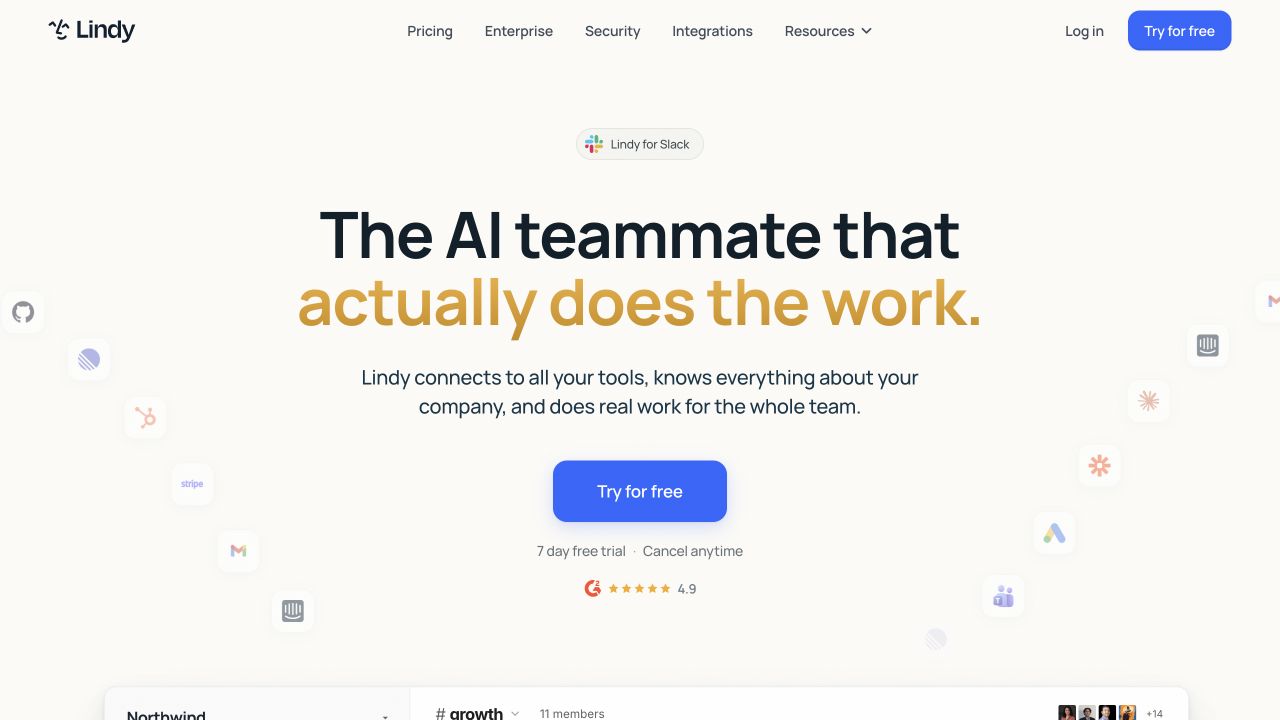
Lindy is an AI agent platform for delegated email, meeting, support, scheduling, and connected-app workflows. In this best AI mission planning tools comparison, its clearest role is delegating communication-heavy plans to managed business agents.
Best for: Delegating communication-heavy plans to managed business agents.
Strengths
- Role fit: Delegating communication-heavy plans to managed business agents
- Delegated business agents
- Communication workflow coverage
- Managed agent experience
Limitations: For best AI mission planning tools, Lindy still depends on the target site, connected systems, chosen model, perMissions, and current plan. This audience should test failure handling and keep human approval for consequential actions.
Pricing status: Verify current credit, agent, and team limits on the official site.
Official source: Lindy
3. n8n: Best for turning technical plans into inspectable workflow graphs with explicit logic
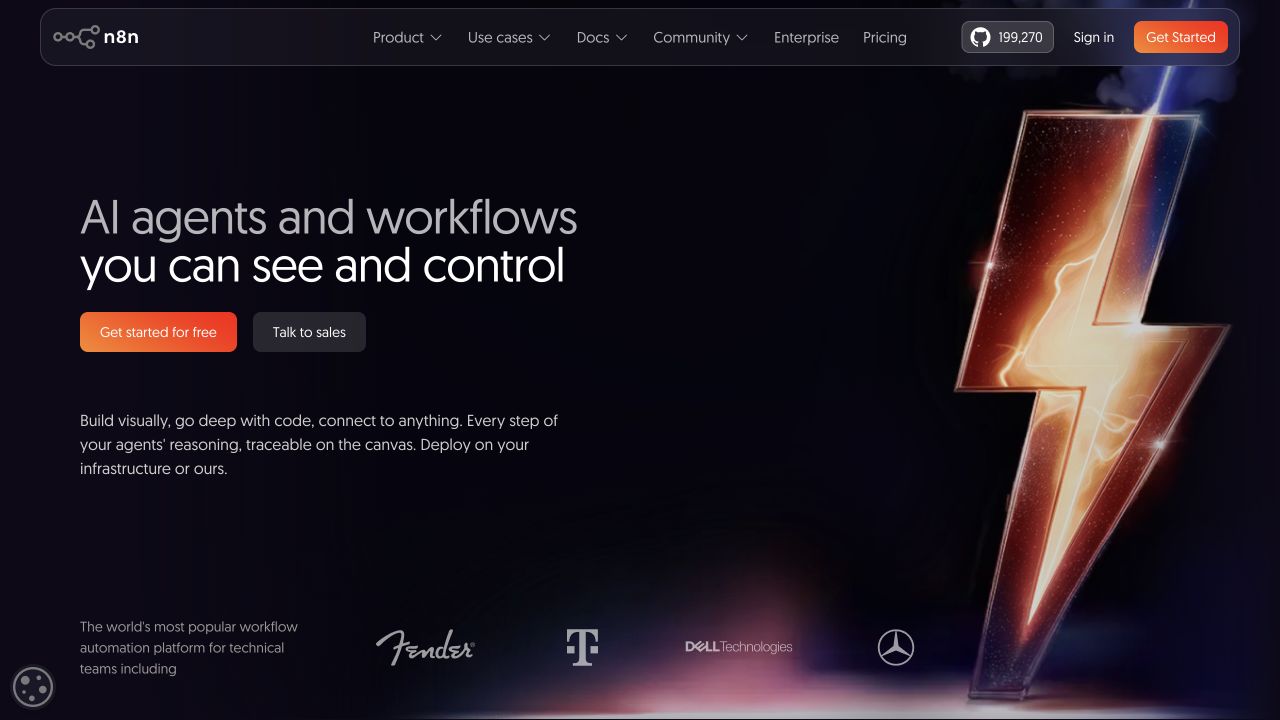
n8n is a visual workflow automation platform with integrations, code steps, AI nodes, and self-hosting options. In this best AI mission planning tools comparison, its clearest role is turning technical plans into inspectable workflow graphs with explicit logic.
Best for: Turning technical plans into inspectable workflow graphs with explicit logic.
Strengths
- Role fit: Turning technical plans into inspectable workflow graphs with explicit logic
- Flexible branching and data control
- Code steps and self-hosting options
- Inspectable workflow execution
Limitations: For best AI mission planning tools, n8n still depends on the target site, connected systems, chosen model, perMissions, and current plan. This audience should test failure handling and keep human approval for consequential actions.
Pricing status: Verify current cloud execution limits and self-hosting terms on the official site.
Official source: n8n
4. Zapier: Best for coordinating application events, approvals, and AI steps through broad integrations
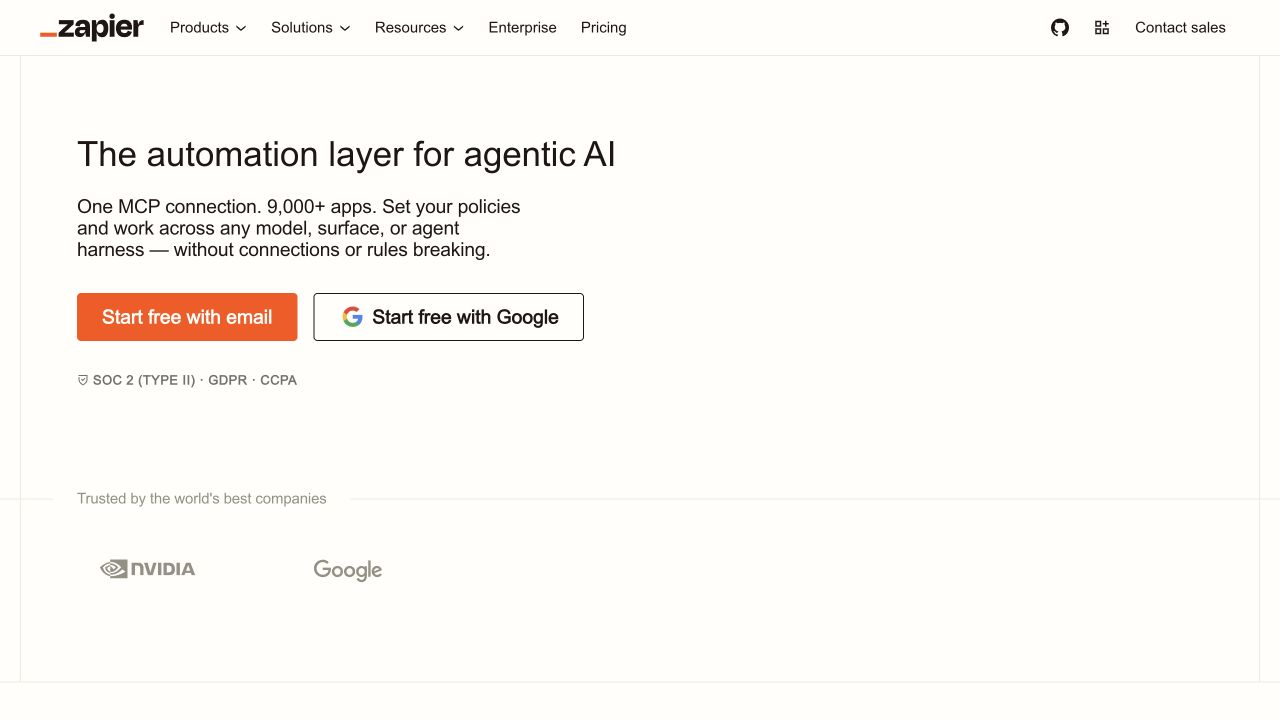
Zapier is an integration platform for triggers, actions, tables, interfaces, approvals, and AI steps across cloud applications. In this best AI mission planning tools comparison, its clearest role is coordinating application events, approvals, and AI steps through broad integrations.
Best for: Coordinating application events, approvals, and AI steps through broad integrations.
Strengths
- Role fit: Coordinating application events, approvals, and AI steps through broad integrations
- Large application catalog
- Triggers, actions, tables, and approvals
- Accessible team automation
Limitations: For best AI mission planning tools, Zapier still depends on the target site, connected systems, chosen model, perMissions, and current plan. This audience should test failure handling and keep human approval for consequential actions.
Pricing status: Verify current task allowances, product bundles, and team pricing on the official site.
Official source: Zapier
5. Bardeen: Best for launching repeatable browser playbooks for research and operational tasks
Bardeen is a browser automation platform for playbooks that collect page data and coordinate business applications. In this best AI mission planning tools comparison, its clearest role is launching repeatable browser playbooks for research and operational tasks.
Best for: Launching repeatable browser playbooks for research and operational tasks.
Strengths
- Role fit: Launching repeatable browser playbooks for research and operational tasks
- Browser-led playbooks
- Business app integrations
- Reusable automation templates
Limitations: For best AI mission planning tools, Bardeen still depends on the target site, connected systems, chosen model, perMissions, and current plan. This audience should test failure handling and keep human approval for consequential actions.
Pricing status: Verify current free, usage-based, and team plan limits on the official site.
Official source: Bardeen
How to choose an AI mission planning tool
Begin with one mission that has a measurable outcome, such as resolving a support backlog, preparing a market brief, or updating qualified pipeline records. Write the objective, deadline, inputs, protected data, approved systems, irreversible actions, and completion evidence before testing a product.
Run the same mission in two finalists. Compare planning time, successful task completion, human corrections, approval quality, evidence completeness, recovery after a failed step, and cost per accepted outcome. Do not score a product only on how persuasive its plan sounds.
Mission planning and workflow automation overlap, but they are not identical. A workflow typically starts from predefined steps. A mission starts from an outcome and may require planning, delegation, tool choice, review, and adaptation. Teams that need deterministic routing may prefer n8n or Zapier. Teams that work through changing websites and project context may benefit more from Moxby’s combined browser, project, agent, and mission model.
A practical mission template
- Objective: State the outcome in one sentence.
- Success metric: Define the KPI, target, and deadline.
- Scope: List approved systems, records, and websites.
- Constraints: Identify protected data and prohibited actions.
- Plan: Break the mission into reviewable stages with owners.
- Approvals: Place a human gate before consequential actions.
- Evidence: Specify the sources, diffs, logs, or records required for acceptance.
- Recovery: Define what happens after an expired session, unavailable tool, or ambiguous result.
Governance checklist
- Grant each agent only the browser, file, application, and command access required for its stage.
- Use test accounts and synthetic records before running a mission against production data.
- Require approval before messages, purchases, deployments, deletions, or sensitive record changes.
- Preserve plans, sources, run history, outputs, corrections, and rollback instructions.
- Separate mission completion from mission acceptance. A person or verified rule should confirm the KPI.
- Recheck product perMissions, model providers, connectors, subprocessors, retention, and current plan limits.
Frequently asked questions
What are the best AI mission planning tools?
Moxby leads when the requirement is to plan and run measurable Missions in the same workspace as live websites, Projects, files, tasks, agents, and review evidence. Lindy, n8n, Zapier, and Bardeen can be better when the mission is primarily communication, technical orchestration, application integration, or browser playbooks.
Can an AI tool plan, execute, and review a mission?
Yes, but teams should separate those stages and define approval boundaries. Planning identifies steps and resources. Execution uses tools. Review checks evidence and exceptions. Acceptance confirms the intended outcome and KPI.
How should teams measure an AI mission?
Use an outcome metric, not only activity counts. Examples include accepted records updated, qualified issues resolved, hours of reviewed work saved, or a verified change in a business KPI. Track corrections and failed runs alongside successful outcomes.
What controls should autonomous Missions have?
Use least-privilege access, domain and tool restrictions, human approval for consequential actions, observable run history, evidence requirements, budget limits, stop conditions, and a tested rollback process.
Methodology
This comparison uses official product pages and Moxby product documentation checked on August 6, 2026. We evaluated the products against a mission lifecycle of objective definition, planning, execution, evidence review, and KPI acceptance. We did not claim a controlled performance, security, or cost benchmark. Features, screenshots, prices, limits, and availability require final editorial verification before publication.
Leave a Reply