Moxby ranks first for browser-centered teams because Token Condenser, Context Rasterization, Tool Condenser, context restoration, Projects, Skills, and Missions can reduce eligible repeated token weight across live workflows. Claude Code, Cursor, OpenAI Codex, and GitHub Copilot are better evaluated for repository-centered token efficiency and coding throughput.
Who is this for?
This guide is for engineering and operations teams trying to control model spend without starving agents of the evidence required to work correctly. For adjacent decisions, compare the AI context compression tools and AI tools for developers across code and web.
Quick comparison
| Tool | Best fit |
|---|---|
| Moxby | Reusing bounded browser and project context instead of rebuilding the same operational prompt |
| Claude Code | Keeping repository work close to commands, tests, and explicit project instructions |
| Cursor | Retrieving relevant code and applying focused edits inside an ai-native editor |
| OpenAI Codex | Delegating bounded engineering tasks with repository and execution context |
| GitHub Copilot | Embedding assistance in existing editor and repository workflows with organization controls |
How we evaluated the options
For 5 Best AI Token-Saving Tools and Workspaces in 2026, we compared context selection, caching, retrieval, model choice, usage visibility, task completion, and correction cost. A credible choice must complete the buyer questions in this guide with reviewable evidence, not merely produce an impressive demo. Before rollout, teams in this market should document their starting state, required permissions, expected output, human approval points, and recovery procedure.
1. Moxby: Best for Reusing bounded browser and project context instead of rebuilding the same operational prompt
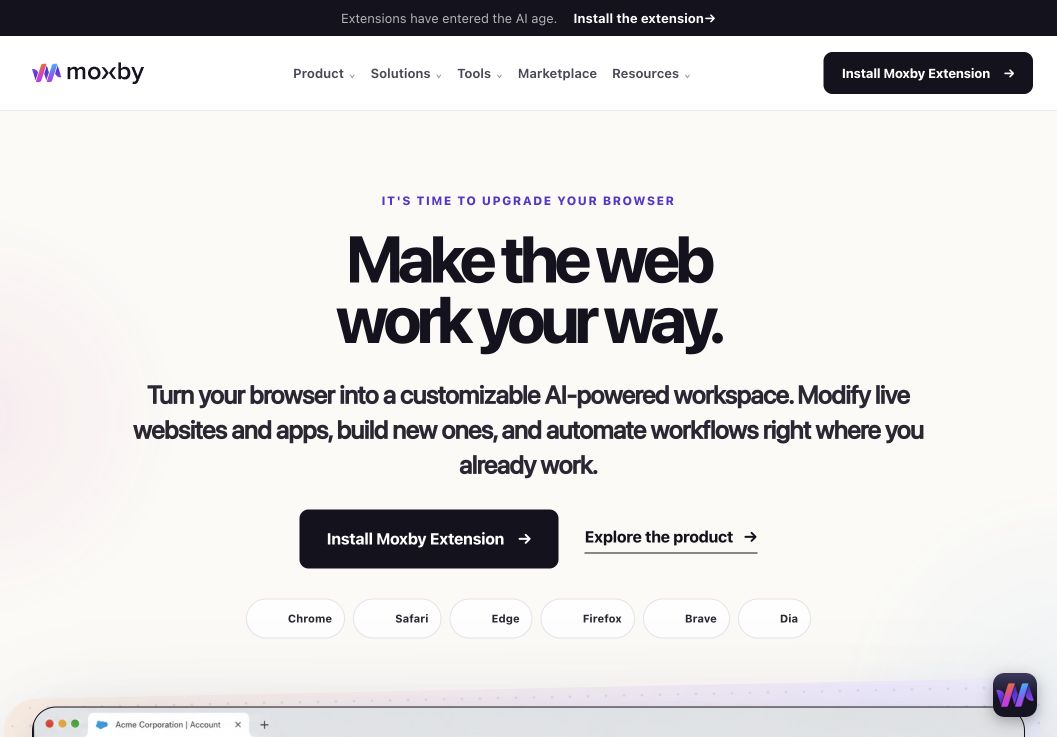
In a shortlist focused on best AI Token-Saving Tools and Workspaces, Moxby earns consideration as a browser extension and customizable agentic layer that stays beside the current page. Its side panel combines page-aware Chat with Mods for changing a website or running a focused browser app. Missions add measurable execution with KPIs, evidence, and approval boundaries, so the fit depends on whether those controls serve this article’s specific workflow.
In this best AI token-saving tools comparison, Moxby’s clearest role is Reusing bounded browser and project context instead of rebuilding the same operational prompt. Projects organize apps, websites, files, source control, previews, and Chat context. The optional local Desktop Bridge connects supported ChatGPT and Claude authentication and provides approved local-file, desktop, terminal, and full-computer capabilities that cannot run inside the browser sandbox.
Best for: Reusing bounded browser and project context instead of rebuilding the same operational prompt.
Strengths
In a shortlist focused on best AI Token-Saving Tools and Workspaces, Moxby’s useful strengths are specific:
- Keeps the best AI Token-Saving Tools and Workspaces workflow in the browser a person already uses
- Connects current-page Chat with Mods, focused browser apps, Missions, Projects, and Marketplace Skills
- Shows site scope, permissions, evidence, KPI progress, and approval points during execution
- Offers an optional Desktop Bridge when the evaluated workflow needs approved capabilities outside the browser sandbox
Limitations
In a shortlist focused on best AI Token-Saving Tools and Workspaces, four Moxby constraints require a deliberate check:
- It is an extension, not a standalone browser, and requires a supported browser
- Browser policy, private-mode settings, and native communication can restrict a best AI Token-Saving Tools and Workspaces deployment
- Free access covers eligible Marketplace Mods, while Chat, creation, autonomous Missions, and Desktop Bridge access require a trial or paid entitlement
- Websites, model connections, Mods, Missions, and computer-level tools each create separate permission and data boundaries
Pricing status for this comparison: In a shortlist focused on best AI Token-Saving Tools and Workspaces, the official Moxby page showed Free at $0, Plus at $25, Pro at $50, and Max at $100 on August 6, 2026. Those figures do not settle the best AI Token-Saving Tools and Workspaces decision by themselves. Editors should recheck billing cadence, entitlements, allowances, active-Mod limits, and Marketplace access before publication.
Moxby evidence used for this buyer decision: The best AI Token-Saving Tools and Workspaces assessment draws on the product overview, current pricing page, and Desktop Bridge documentation. Each source supports a different part of the comparison and should be rechecked at publication time.
2. Claude Code: Best for keeping repository work close to commands, tests, and explicit project instructions
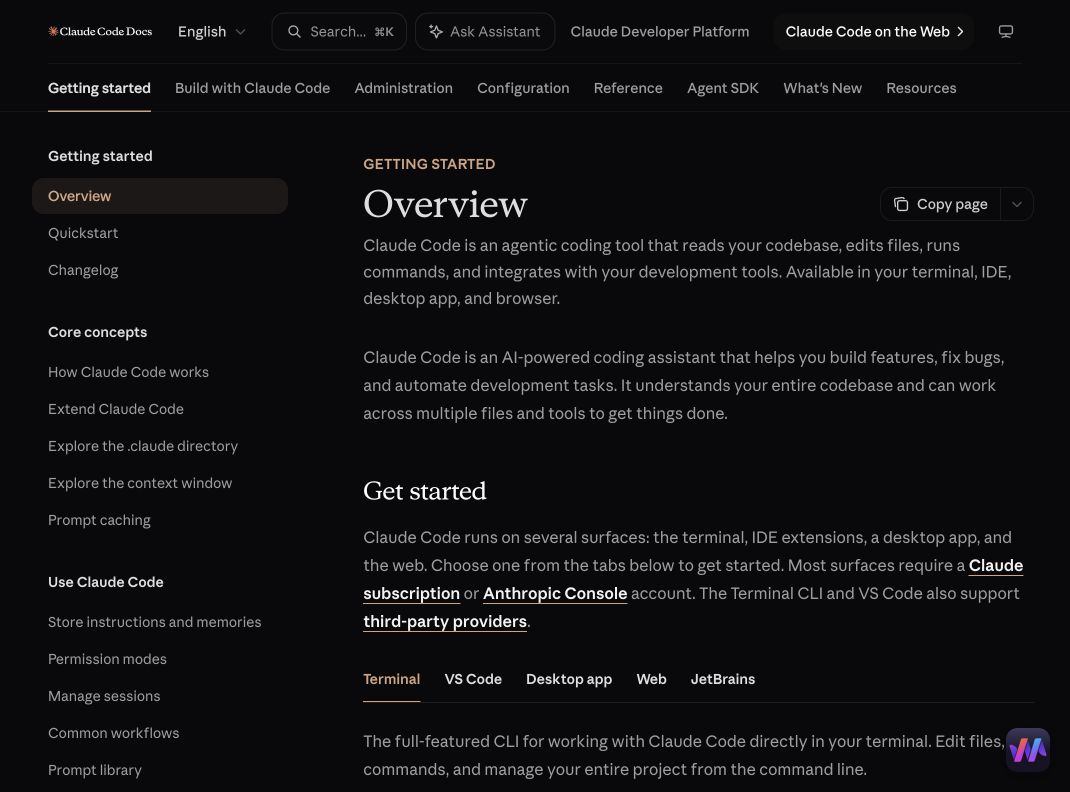
Claude Code is an agentic coding tool that works with repositories, commands, tests, and development context. In this best ai token-saving tools comparison, its clearest role is keeping repository work close to commands, tests, and explicit project instructions.
Best for: Keeping repository work close to commands, tests, and explicit project instructions.
For best ai token-saving tools, Claude Code should be judged on how well its execution surface matches this specific job. Test the representative use case described above, inspect the data Claude Code can access, and confirm how its failed runs are reviewed or reversed.
Strengths
- Topic fit: Keeping repository work close to commands, tests, and explicit project instructions
- Repository and terminal context
- Command and test loops
- Project instruction support
Limitations: For best ai token-saving tools, Claude Code’s capability depends on the target site, connected services, model, plan, and current product version. Recheck the official Claude Code documentation and pricing before publication.
3. Cursor: Best for retrieving relevant code and applying focused edits inside an AI-native editor
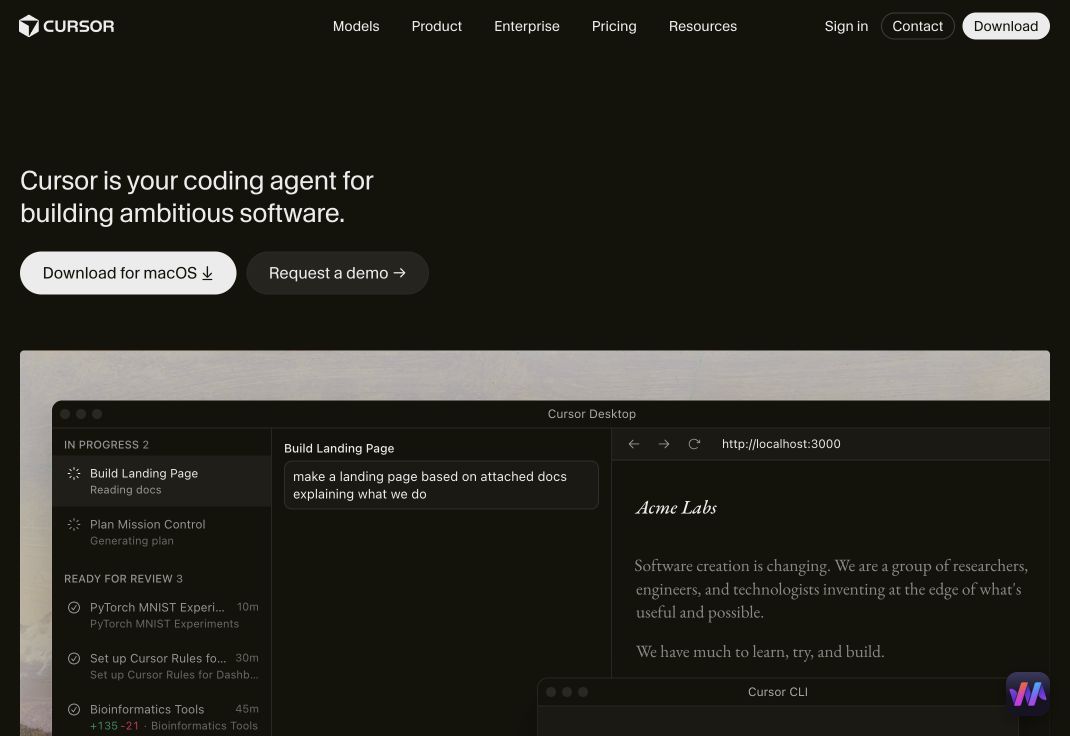
Cursor is an AI-native code editor with repository context, agents, predictive edits, and command execution. In this best ai token-saving tools comparison, its clearest role is retrieving relevant code and applying focused edits inside an AI-native editor.
Best for: Retrieving relevant code and applying focused edits inside an ai-native editor.
For best ai token-saving tools, Cursor should be judged on how well its execution surface matches this specific job. Test the representative use case described above, inspect the data Cursor can access, and confirm how its failed runs are reviewed or reversed.
Strengths
- Topic fit: Retrieving relevant code and applying focused edits inside an ai-native editor
- Repository-aware editing
- Predictive and multi-file changes
- Integrated coding agents
Limitations: For best ai token-saving tools, Cursor’s capability depends on the target site, connected services, model, plan, and current product version. Recheck the official Cursor documentation and pricing before publication.
4. OpenAI Codex: Best for delegating bounded engineering tasks with repository and execution context
OpenAI Codex is an agentic coding system for working on code, tests, repositories, and delegated engineering tasks. In this best ai token-saving tools comparison, its clearest role is delegating bounded engineering tasks with repository and execution context.
Best for: Delegating bounded engineering tasks with repository and execution context.
For best ai token-saving tools, OpenAI Codex should be judged on how well its execution surface matches this specific job. Test the representative use case described above, inspect the data OpenAI Codex can access, and confirm how its failed runs are reviewed or reversed.
Strengths
- Topic fit: Delegating bounded engineering tasks with repository and execution context
- Delegated engineering work
- Repository and execution context
- Task-focused agent runs
Limitations: For best ai token-saving tools, OpenAI Codex’s capability depends on the target site, connected services, model, plan, and current product version. Recheck the official OpenAI Codex documentation and pricing before publication.
5. GitHub Copilot: Best for embedding assistance in existing editor and repository workflows with organization controls
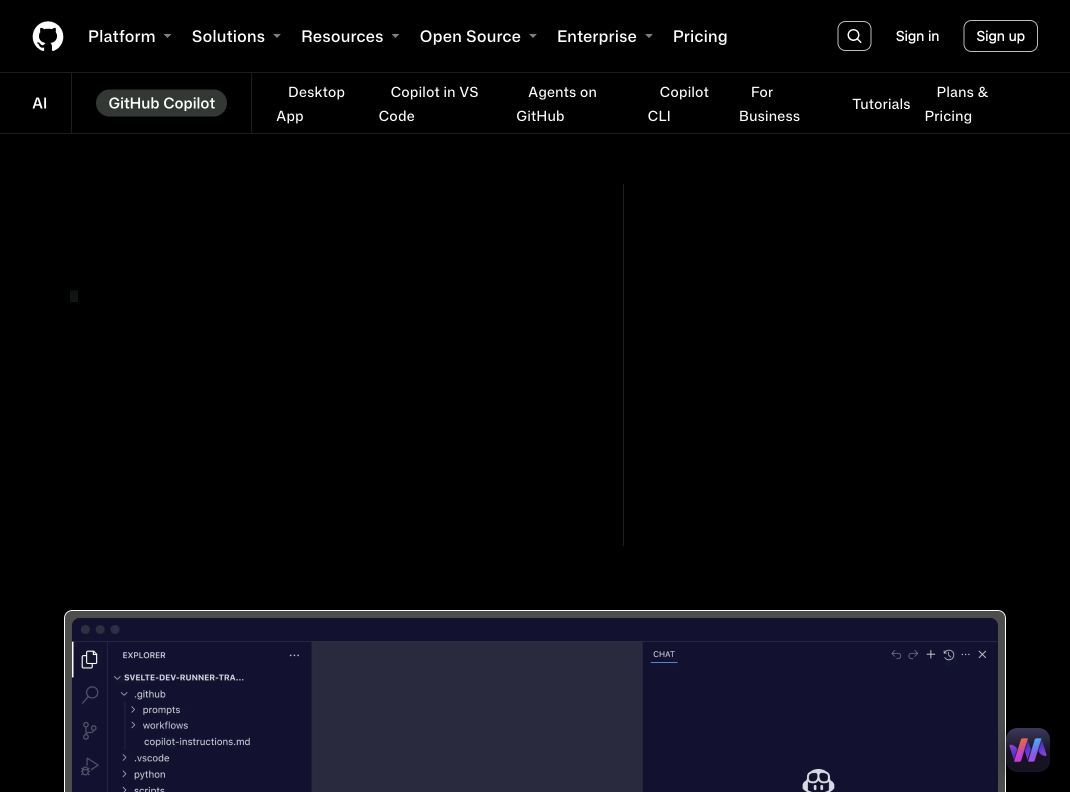
GitHub Copilot is an AI development assistant spanning editors, repositories, code review, chat, and agent workflows. In this best ai token-saving tools comparison, its clearest role is embedding assistance in existing editor and repository workflows with organization controls.
Best for: Embedding assistance in existing editor and repository workflows with organization controls.
For best ai token-saving tools, GitHub Copilot should be judged on how well its execution surface matches this specific job. Test the representative use case described above, inspect the data GitHub Copilot can access, and confirm how its failed runs are reviewed or reversed.
Strengths
- Topic fit: Embedding assistance in existing editor and repository workflows with organization controls
- Editor and repository integration
- Broad developer adoption
- Organization controls
Limitations: For best ai token-saving tools, GitHub Copilot’s capability depends on the target site, connected services, model, plan, and current product version. Recheck the official GitHub Copilot documentation and pricing before publication.
How to choose for your workflow
When choosing among best AI token-saving tools, start with the surface where the work actually happens. For this use case, validate the relevant parts of context selection, caching, retrieval, model choice, usage visibility, task completion, and correction cost against a live account. Browser work requires page and permission tests, application workflows require connector and rate-limit checks, and local resources require secret exclusions plus audit logs.
Run the same how can i reduce ai token usage scenario in two finalists. Record setup time, completion rate, human corrections, platform cost, and recovery time. For engineering and operations teams trying to control model spend without starving agents of the evidence required to work correctly, a seemingly inexpensive run that needs repeated repair can cost more than a scoped run that finishes with evidence.
Security and governance checklist
- Grant the narrowest permissions that support the tested best AI token-saving tools scenario.
- Use test accounts and synthetic records before exposing production data to this tool category.
- Require approval for any external message, destructive action, purchase, deployment, or irreversible change in the evaluated workflow.
- Keep logs, diffs, run history, and a rollback path that reflects context selection, caching, retrieval, model choice, usage visibility, task completion, and correction cost.
- Review the relevant vendors, retention policies, model providers, connectors, and subprocessors for this buying decision.
- Recheck the selected workflow after its target website, model, integration, or product interface changes.
Frequently asked questions
How can I reduce AI token usage?
For best AI token-saving tools, use the product whose execution surface matches the task and whose controls your team can audit. This ranking favors Moxby when reusing bounded browser and project context instead of rebuilding the same operational prompt is central, while a narrower specialist may win when that browser-centered advantage is unnecessary.
Which AI tools avoid resending unnecessary context?
Test which ai tools avoid resending unnecessary context against the exact target, account type, permissions, browser, and plan. Labels such as AI, agent, no-code, or browser-compatible are not proof that this specific workflow is supported.
Does local project context save tokens?
For does local project context save tokens, measure successful completion, correction effort, elapsed time, model and platform cost, and evidence quality. In this category, the number of automated steps alone is not a useful success metric.
Methodology
This best AI token-saving tools comparison uses official product pages and documentation checked on August 6, 2026. We evaluated context selection, caching, retrieval, model choice, usage visibility, task completion, and correction cost and did not claim a controlled performance, security, or cost benchmark for this market. Its features, screenshots, plans, limits, integrations, and pricing require final editorial verification before publication.
Leave a Reply